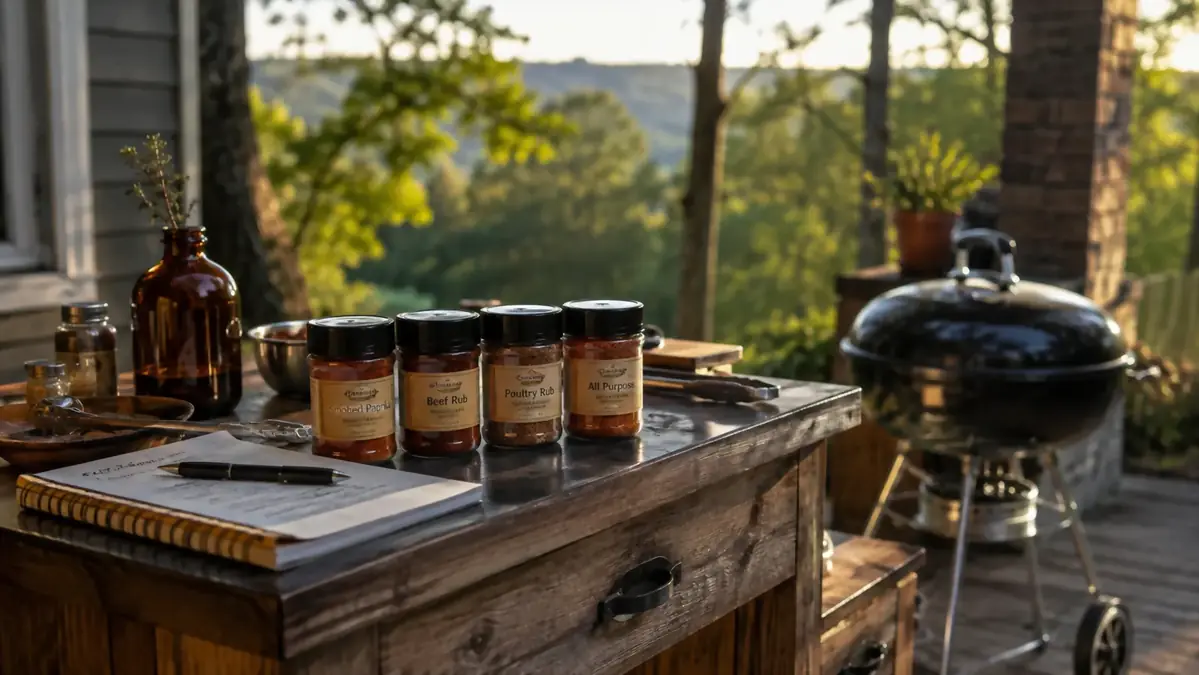
I used to pick a rub the way I picked out produce at the store, whatever caught my eye on the shelf. Read the label, take a guess, buy the big bottle, and hope for the best. That got me through a lot of years of cookouts, but it also filled a cabinet shelf with half-used bottles of things nobody ever reached for twice. A rub that sounds right reading a label in a store aisle doesn't always taste right on a chuck roast in my own backyard, and I learned that the expensive way more than once before I changed how I did this. The label never tells you how it actually smells once it's opened, and it definitely doesn't tell you how it holds up over an hour on a kettle.
A couple seasons back Renata brought home a Thoughtfully Smokehouse sampler set as a stocking stuffer, four small jars instead of one big bottle, and it changed how I test a rub before I commit to buying more of it. I didn't set out to build a method. It just turned out that running four flavors side by side, on purpose, taught me more in a month than years of blind bottle guessing ever did. By the third weekend I had an actual process instead of a shrug and a hope, and that process is what I'm laying out below, step by step, the same order I'd tell a neighbor to run it in.
Stop guessing at rub flavor before you buy the big bottle.
This is the same Thoughtfully Smokehouse set I used to build the method below, four flavors in one box instead of one guess on a full-size bottle.
Amazon Check Today's Price on Amazon →Step 1: Pick One Cut of Meat to Standardize the Test
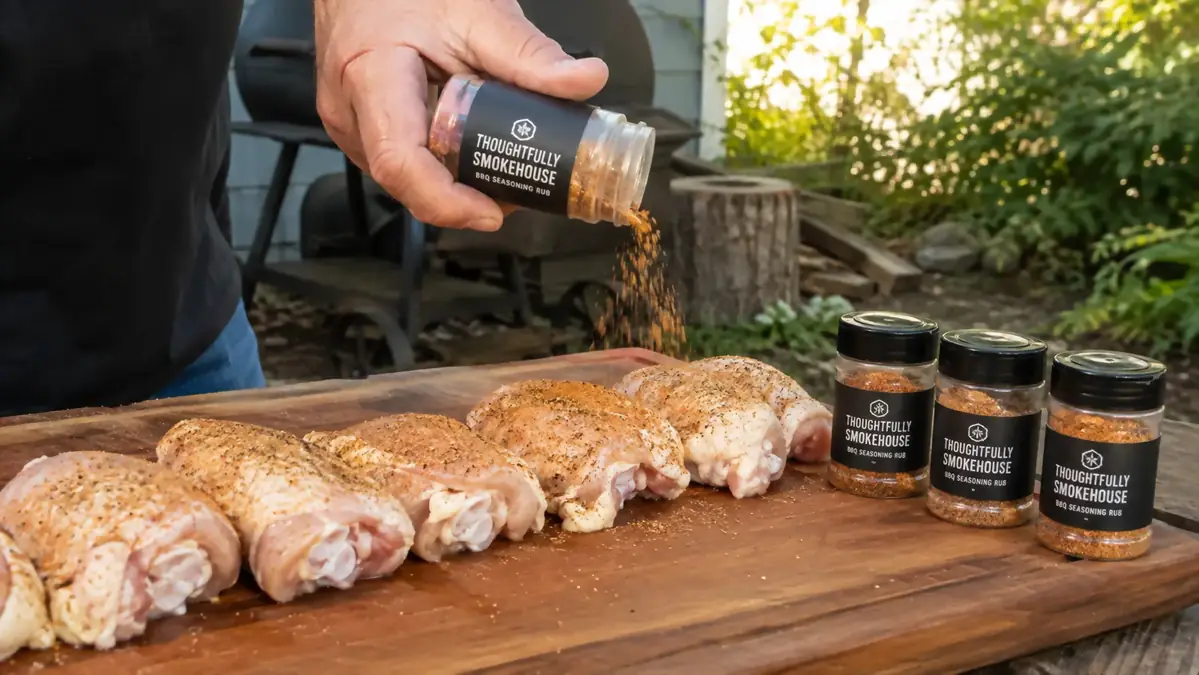
The biggest mistake I made early on was testing one jar on ribs, another on chicken, and a third on a pork shoulder, then trying to compare them from memory weeks apart. That's not a real comparison, that's four different meals with four different variables. Pick one cut and stick with it for the whole test. I used chicken thighs, since they're cheap, cook fast, and don't hide seasoning the way a long-smoked shoulder can.
It doesn't have to be chicken. Pick whatever you cook most on a normal weekend, since the whole point is figuring out which rub fits your actual cooking, not some ideal version of it. If Saturdays at your house mean burgers, test on burgers. The method only works if the meat stays constant and the rub is the only thing changing from one cook to the next.
Season each piece the same way too, same amount, same rest time before it hits the grill. If one jar gets a heavy hand and another gets a light dusting, you're not testing the rub anymore, you're testing how much of it you used. Keep everything else boring and predictable so the flavor differences are the only thing you notice.
Before any of that, take thirty seconds to open the jar and just smell it and rub a pinch between your fingers. You'll notice texture differences right away, some blends run coarser with visible pepper flake, others are finer and almost powdery. That's not scoring yet, it's just getting familiar with what you're about to put on the meat so nothing about the flavor surprises you later.
Step 2: Run One Jar Per Weekend, Not All Four at Once
I tried running all four flavors on the same plate the first weekend, one strip of chicken per jar, and it was a mess. Your palate gets tired fast, and by the third bite everything starts tasting like pepper and salt no matter what's actually in the jar. One flavor a weekend gives your taste buds a real shot at each one instead of a blur of four.
This also spreads the test out over about a month, which sounds slow until you realize a month of normal cookouts is nothing compared to years of buying full bottles on a hunch. Four weekends with the Thoughtfully Smokehouse set told me more than three years of grabbing whatever bottle was on the shelf that week. It's not a longer process than guessing, it's just a more honest one.
It also fits real life better. Some weekends it's just me and Renata on the patio, other weekends Danielle's bringing friends over or my brother's crew shows up for something bigger. Rotating one jar per weekend means the test rides along with whatever's already happening instead of requiring some special event you have to plan around.
Write which jar you're using on the calendar or a sticky note before you even light the coals. It sounds unnecessary until the following weekend rolls around and you can't remember if last Saturday was the sweeter blend or the peppery one. A five-second reminder up front saves you from second-guessing your own notes later.

Step 3: Score Each Jar the Same Simple Way
Memory is a bad scorekeeper. I thought I'd remember which jar was which after a month, and by week three I was already mixing up which one was the sweeter blend. Now I keep a small notepad clipped to the grill cart and jot down three things after every cook, how hot it was, how sweet it was, and whether it was mostly salt doing the work. Takes fifteen seconds and saves you from guessing at your own results later.
Use the same three categories every time, even if they feel too simple. The goal isn't a food critic's write-up, it's a fast, repeatable way to tell four jars apart three weeks after you tasted the first one. When I finally sat down with four weeks of notes on the Thoughtfully Smokehouse set, the pattern was obvious in about ten seconds. Without notes, I'd have been arguing with myself over which one I actually preferred.
If a notepad isn't your thing, a note on your phone works just as well, whatever you'll actually keep up with for four straight weekends. I only switched to paper because my phone was usually greasy or in the house by the time the food came off. Either way, the format matters less than doing it the same way every single time, since a scoring system you change halfway through isn't really a scoring system anymore.
Step 4: Get a Second Opinion From People Who Aren't You
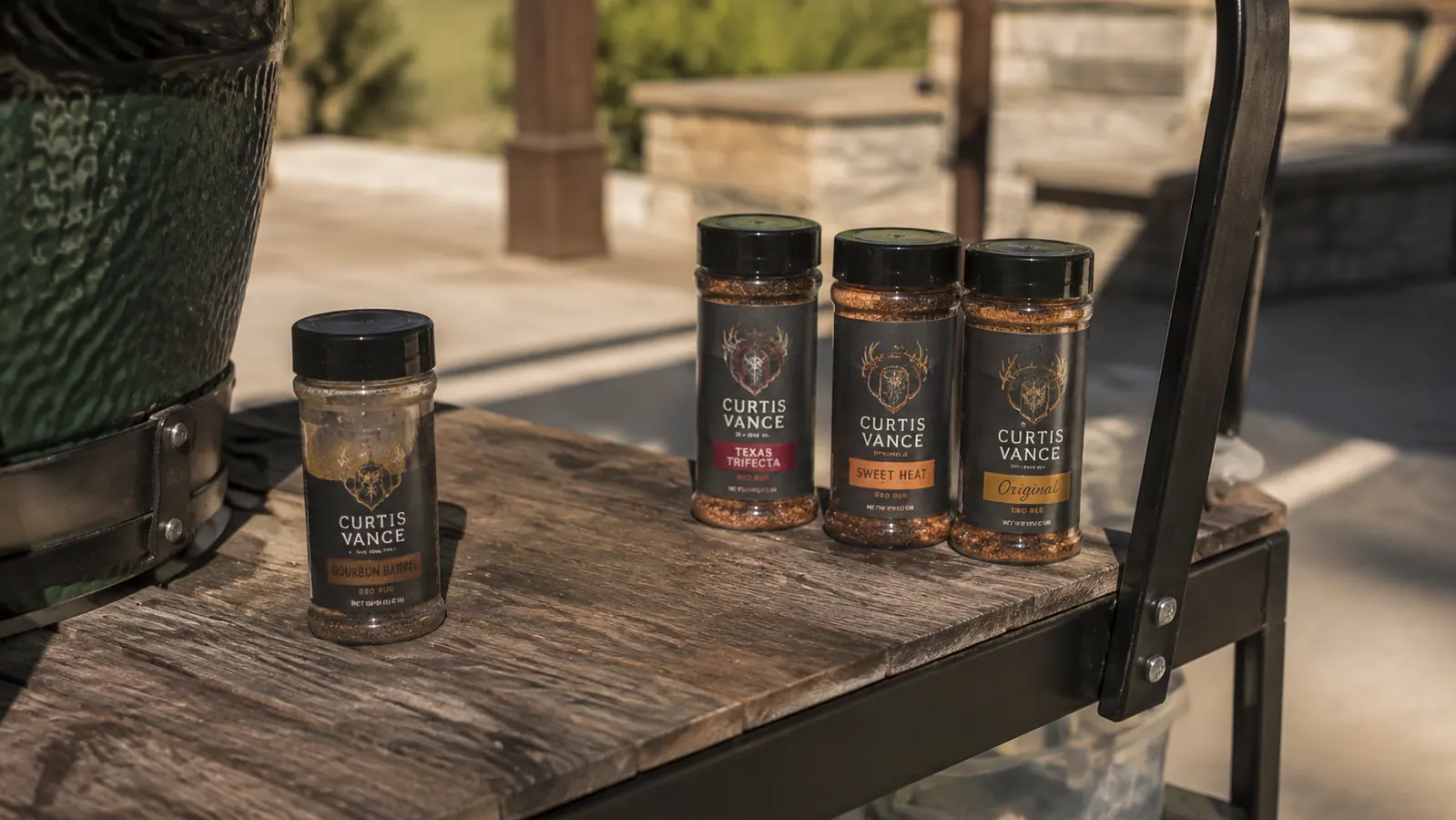
Your own taste is a useful data point, but it's one data point. I've been wrong about what "everybody" would like plenty of times, usually because I was cooking for myself and forgot other people were eating too. Once Danielle's friends started showing up on the weekends I was testing, I started setting out two jars at a time and letting people season their own plate instead of deciding for them.
Watching somebody reach for a jar a second time tells you more than a compliment does. Compliments are polite. A second helping isn't. I noticed the milder blend kept disappearing fastest with the younger crowd, while the peppery one was mostly Owen and my brother fighting over it. That split by itself told me this wasn't going to be a single obvious winner across the board, it was going to depend some on who was at the table.
Even my neighbor Gil, who mostly shows up to borrow a tool and stay for dinner, ended up being useful here. He's not shy about telling you a rub's too sweet or too flat, and an honest opinion from somebody who has no reason to be polite about it is worth more than a table full of guests being nice because you cooked for them.
Step 5: Confirm the Winner on a Repeat Cook
By week four I had a clear favorite on paper, but I didn't buy a full bottle of it right away. I ran that same jar again the next weekend, on the same cut, to make sure it wasn't a fluke, a good mood, or a lucky batch of chicken. A rub that wins once could just be a good day. A rub that wins twice on two separate weekends is a real answer.
That second cook is the part people skip, and it's the part that actually saves you money and shelf space down the road. If the winner holds up a second time, you've got your go-to and you can commit to a full-size bottle with confidence instead of a guess. If it doesn't hold up, you just saved yourself from buying sixteen ounces of something that was really a one-time fluke.
Don't toss the runner-up jars once you've got a winner, either. I still keep the second and third place flavors in the cart for the exact situations they turned out to fit, one for a weeknight when I want something quick and mild, one for whenever Owen shows up and wants more heat than the rest of us. The point was never to throw three flavors away, it was to know which one to reach for first.
What Else Helps
Keep the notes somewhere you'll actually see again, not a scrap of paper that ends up in the trash with the charcoal bags. I use a cheap notepad clipped inside the grill cart, right next to the thermometer, so it's there every time I'm cooking and never buried in a drawer. If you finish all four jars and still can't call a clear winner, that's a fine outcome too. It usually just means you've got two flavors that fit two different situations, one for a quiet weeknight dinner and one for when the driveway's full of people. Nothing wrong with keeping both in rotation instead of forcing a single answer.
It also helps to run the whole test during a stretch when you're actually cooking a normal amount, not during a slow month when you'll be tempted to rush two jars into one weekend just to finish faster. The method works because it's paced out, and rushing it defeats the purpose. I ran through the full rub set versus one big bottle comparison after I finished this process, and if you want more of the reasoning behind starting with a sampler instead of committing early, I laid that out in ten reasons I reach for the set over one bottle.
The winner wasn't the rub I would have picked off a label. It was the one that kept getting picked back up, weekend after weekend, without me having to think about it.
Run the same five steps with the same four jars.
Grab the Thoughtfully Smokehouse set, pick one cut of meat, and give yourself a month before you commit to a full-size bottle of anything. I wrote up the whole season it took me to land on a favorite in <a href="/smokehouse-rub-set-review-long-term">my full review</a>, if you want to see how it played out.
Amazon Check Today's Price on Amazon →