
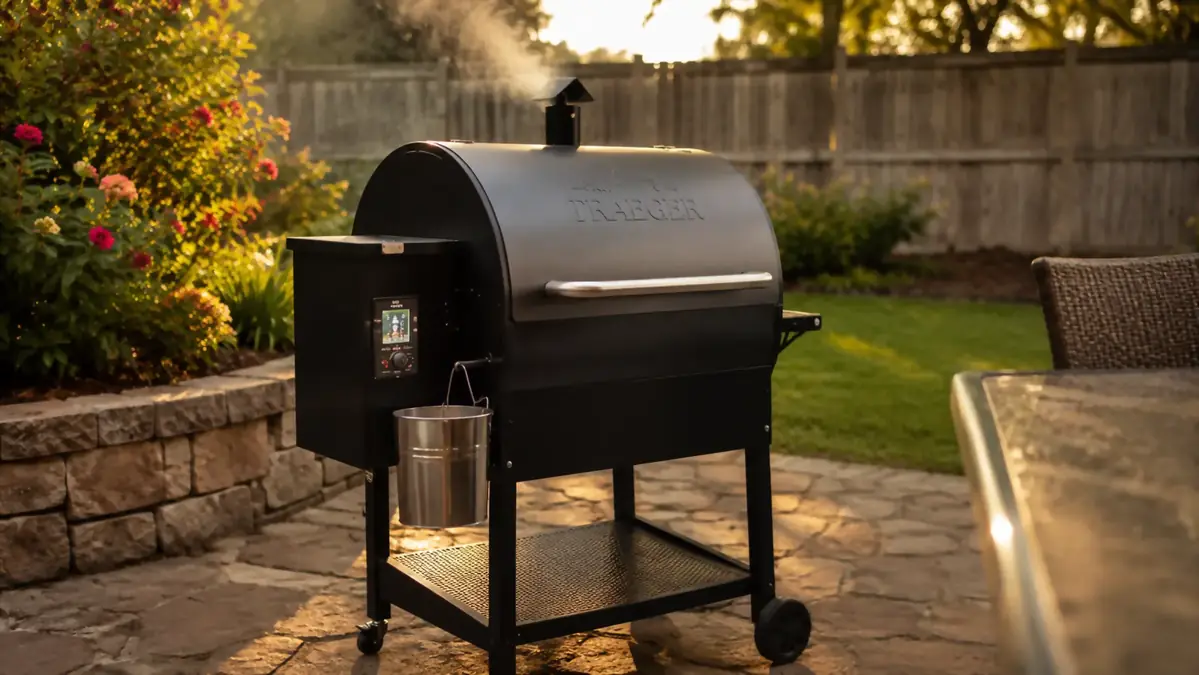
I didn't buy a grease bucket to get organized. I bought it because I got tired of finding a new way for grease to become a problem every single weekend. The Traeger HDW152 has been hooked to the side of my mid-size pellet rig for about a year now, and somewhere in that year I stopped thinking of it as an accessory and started thinking of it as part of the grill. Here are the ten reasons I'd tell anyone still running a stock drip tray to stop putting this off.
None of these are dramatic. Nobody's grill caught fire at my house because of a bad tray, and I'm not going to pretend a plain Traeger bucket changed my life. What it changed was Saturday afternoons, the ten or fifteen minutes right after the last plate comes off the grill when everybody's ready to sit down and I used to still be out there with a hose. That's the list below.
Still scraping a drip tray after every cook?
The Traeger HDW152 bucket routes drippings into a liner bag instead of a tray you have to scrape by hand. Check today's price on Amazon before your next weekend cookout.
Amazon Check Today's Price on Amazon →It Catches the Mess Before It Ever Hits the Ground
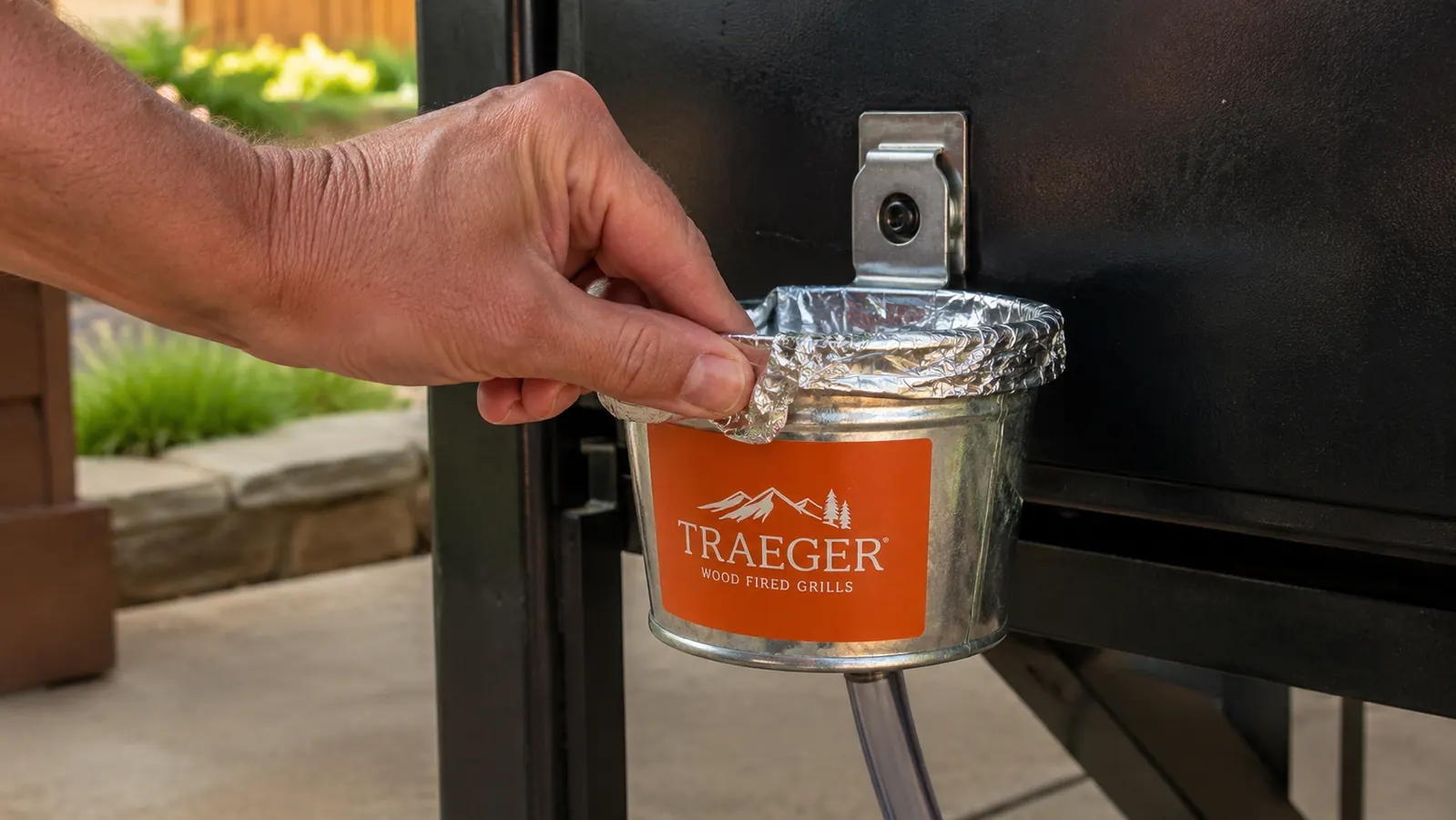
The stock drip tray on my pellet rig let drippings pool for a while and then let them go wherever gravity decided, mostly straight down onto whatever was underneath. The Traeger bucket sits under the drain tube and catches everything the second it leaves the grill, not after it's already found a crack in the concrete. That's the whole difference. The grease doesn't disappear, it just never gets the chance to become somebody's problem in the first place.
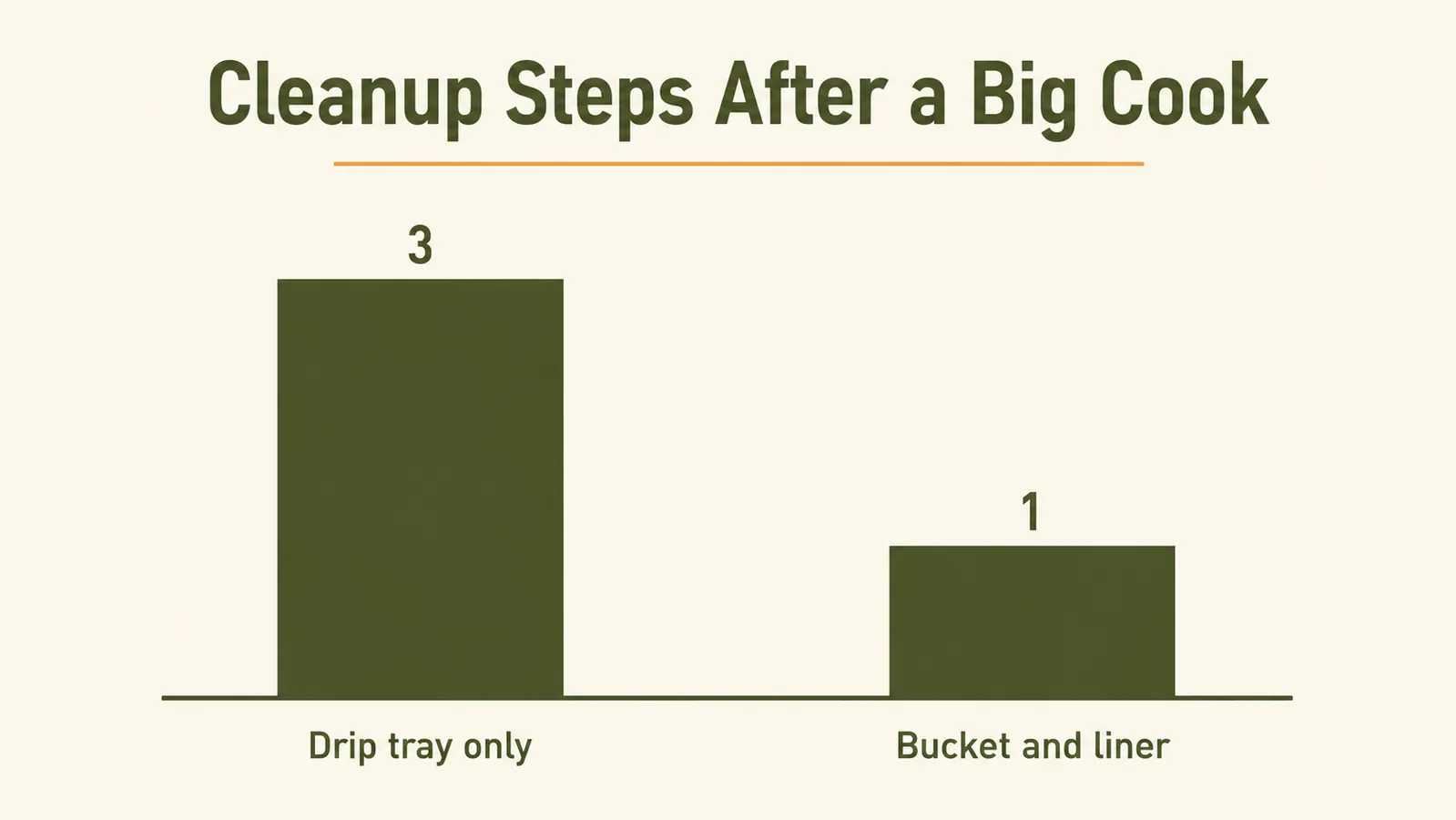
Cleanup Went From Three Jobs to One
Before, a heavy cook day meant scraping the tray, hosing down the patio, and usually wiping grease off the grill's own legs a day or two later when I finally noticed it. Now it's pulling the liner out, tying it shut, and dropping it in the trash. One job instead of three. I actually timed it out of curiosity once, and the old routine ran a good twenty minutes longer than the new one on a typical weekend.
I Can Run the Grill for Hours Without a Mid-Cook Stop
When my brother's cattle-branding day crowd shows up, or a church potluck lands three cooks back to back on a Sunday, the grill runs for four or five hours straight with no real break. The old tray couldn't hold that kind of volume without me stepping away to deal with it mid-event. The bucket lets me go the whole stretch and swap the liner once, at the end, instead of apologizing to guests while I scrape a pan in the middle of things.
It Keeps Drippings Off the Grill's Own Finish
Everybody talks about the patio, but grease that never made it to a tray fast enough used to run down the outside of the grill body too, right along the seams by the firepot door. A season of that and the paint down there had gone dull and sticky no matter how often I wiped it. Routing everything straight into the bucket keeps drippings off the grill itself, not just the ground under it, and the finish has stayed noticeably cleaner for it.

I Can Tell How Full It Is Without Guessing
A drip tray hides underneath the grill where you can't see it without crouching down and craning your neck. The bucket hangs off the side in plain sight, so a glance on my way out to check the hopper tells me exactly where I stand. On an overnight pork butt that matters more than it sounds like it should, because a tray that's quietly overflowing at two in the morning is not something I want to discover at seven.
The Hose Barely Comes Out Anymore
I used to end almost every big cook standing over the patio with a hose, working grease residue out of the slab before it had a chance to set up hard. These days that's rare. Whatever the liner catches never gets a chance to soak into anything, so there's nothing left to scrub. My water bill probably doesn't notice the difference, but my Saturday afternoons definitely do.
Grease and Pellet Ash Stay Separate
Pellet ash is fine and dusty, and if it mixes with grease that's pooled anywhere near the firepot, you end up with a gray paste that's genuinely unpleasant to scrape out. Since the bucket pulls drippings away before they get near the ash tray, I'm not dealing with that combination anymore. Ash stays ash, grease stays in the liner, and neither one ruins my whole week.
Danielle Can Swap the Liner Without Asking Me How
My daughter grills on her own now and again when she's got friends over at my place, and the old tray required a level of know-how, angle the pan just right, don't spill it walking to the trash, that she never wanted to bother learning. The bucket system is simple enough that she just ties off the liner and drops it in the can. I don't get a phone call asking what to do with the grease anymore, and that's its own small win.
Winter Storage Isn't a Rust Project Anymore
I roll the grill into the garage for a few months every winter, and the old tray used to come out flecked with rust by spring no matter how well I'd wiped it down in the fall. The bucket and bracket are simple enough hardware that a quick wipe before storage keeps them looking about the same in April as they did in October. One less thing to deal with once the weather finally turns.
Guests Never Catch Me Mid-Mess
There's a version of hosting where you get pulled away from your own cookout to deal with a tray that's about to overflow while everybody's standing right there. I've been on that side of it more than once. With the bucket, the mess stays contained and out of sight the whole time, so I'm at the table with everyone else instead of at the grill with a rag in my hand. You can read the full year-long breakdown in my Traeger grease bucket review if you want the longer version.
What I'd Skip
I looked at a couple of other options before settling on the plain bucket-and-liner setup, and I'd skip both if I were starting over. One was a big stainless grease drum meant to sit under the whole grill, more capacity than a rig this size will ever need, and it stuck out past the roofline of my covered patio. The other was pouring grease straight down the kitchen drain between cooks, which felt like a shortcut the first couple of times and then cost me a call to a plumber once it finally caught up with the pipe. If you're setting up a Traeger pellet rig for real weekend use, stick with the liner system it's actually built for and skip both of those detours. I put the bucket up against the cheapest alternative, a plain foil pan, in this comparison, and the pan loses more often than you'd think.
I timed it out of curiosity once. The old routine ran a good twenty minutes longer than the new one, most weekends. That adds up to a lot of Saturdays I got back.
A year of weekend cookouts later, this is still the accessory I reach for first.
If cleanup after a big cook is eating into your Saturday, the Traeger HDW152 bucket is worth a look before your next one. My full write-up is in the <a href="/traeger-grease-bucket-honest-review">honest review after dozens of cooks</a>.
Amazon Check Today's Price on Amazon →