
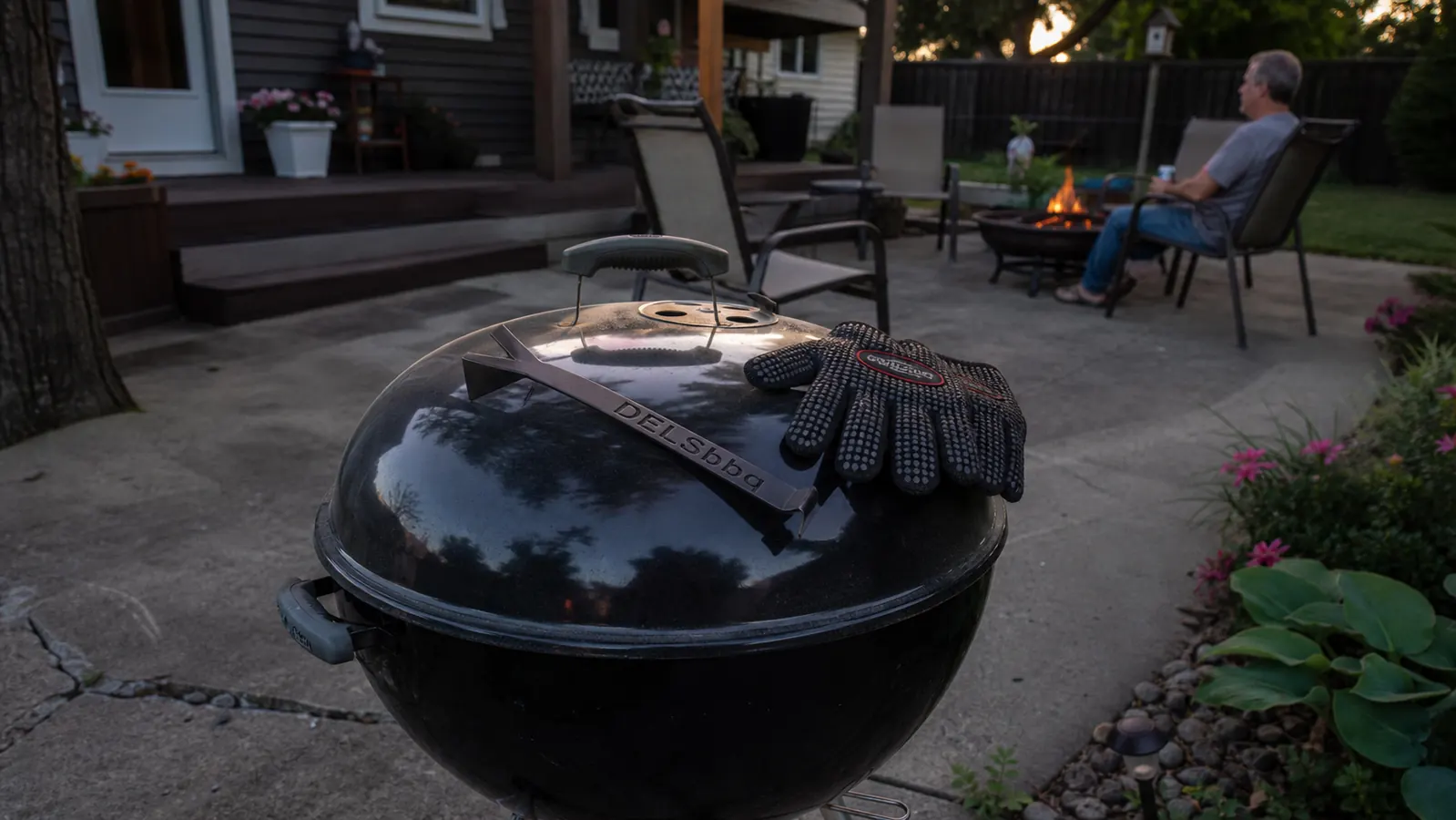
I burned three knuckles in one summer before I ever heard of a grate lifter. Two of those burns came off the same cooking grate on my 22-inch kettle, the kind of grate that's already loaded with a dozen ribs and won't wait while you go find your welding gloves. My neighbor Gil swears by a pair of thick grill gloves he's had since before his youngest was born. I run a DELSbbq cast iron grate lifter that lives on a hook next to my chimney starter. Both of us think we're right, and honestly, we both are, just for different jobs. This is the comparison I wish somebody had laid out for me before I spent a season figuring out which tool actually belongs in my hand when the coals are white hot and Renata's asking how much longer until the chicken's off.
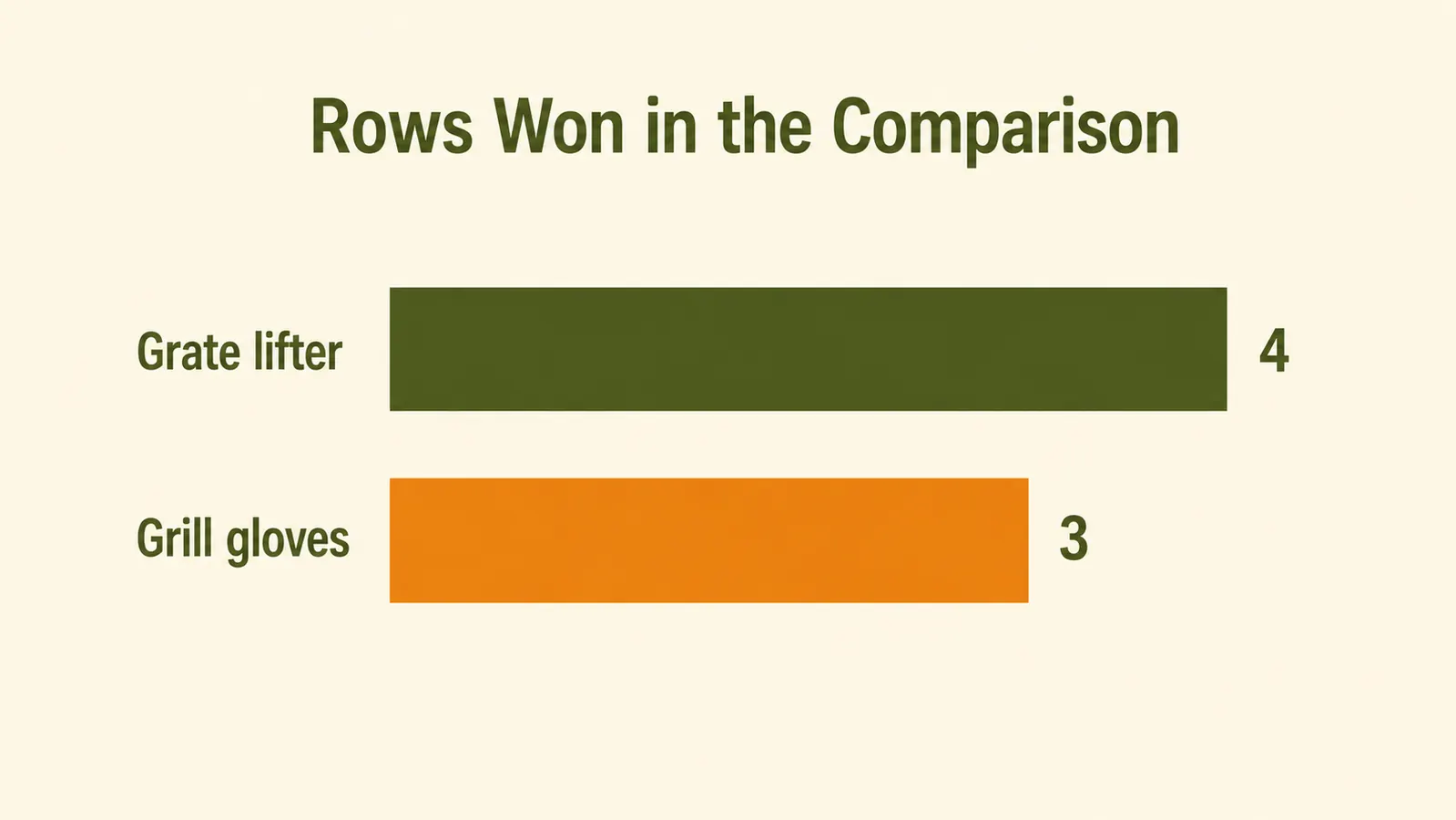
If you want the short answer, the lifter wins for anything involving the actual cooking grate, gloves win for anything involving the rest of the grill. I still keep both in the same drawer on my grill cart. Neither one replaced the other completely, no matter what either package promises. Below is what I found row by row, testing them the same way I test anything, by using them wrong a few times first and seeing what breaks.
| DELSbbq Grate Lifter | Heat-Resistant Grill Gloves | |
|---|---|---|
| Lifting a hot, fully loaded cooking grate off the coals | Cast iron hooks lock under the grate bars, it lifts level even with a full rack of ribs on it | Works, but you're trusting your grip alone on a grate that outweighs a cast iron skillet |
| Protecting your whole hand and forearm from radiant heat | Only the hooks and handle stay cool, your hand is still several inches from the fire | Coverage goes up past the wrist, I've reached past a flare-up without flinching |
| Handling other hot jobs around the grill (foil pans, cast iron, coals) | It only grips grate bars, no use on a skillet handle or a pan of drippings | One pair does the grate area, the skillet, the water pan, and the chimney starter |
| Storage space on a crowded grill cart | Hangs on a single S-hook, takes up less room than a spatula | Two bulky gloves eat up a drawer or end up tossed on the side shelf |
| Cleanup after a greasy cook | Rinses clean under the hose in about ten seconds, no smell carries over | Fabric holds onto grease and smoke smell no matter how long you air them out |
| Grip when your hands are sweaty or wet | The steel hooks can slip if you don't seat them at the right angle first | Textured silicone palms hold on fine even when your hands are damp |
| Weight it can safely carry | Rated to carry a fully loaded cast iron grate without bending | Depends entirely on your own grip strength holding on |
Where the DELSbbq Grate Lifter Wins
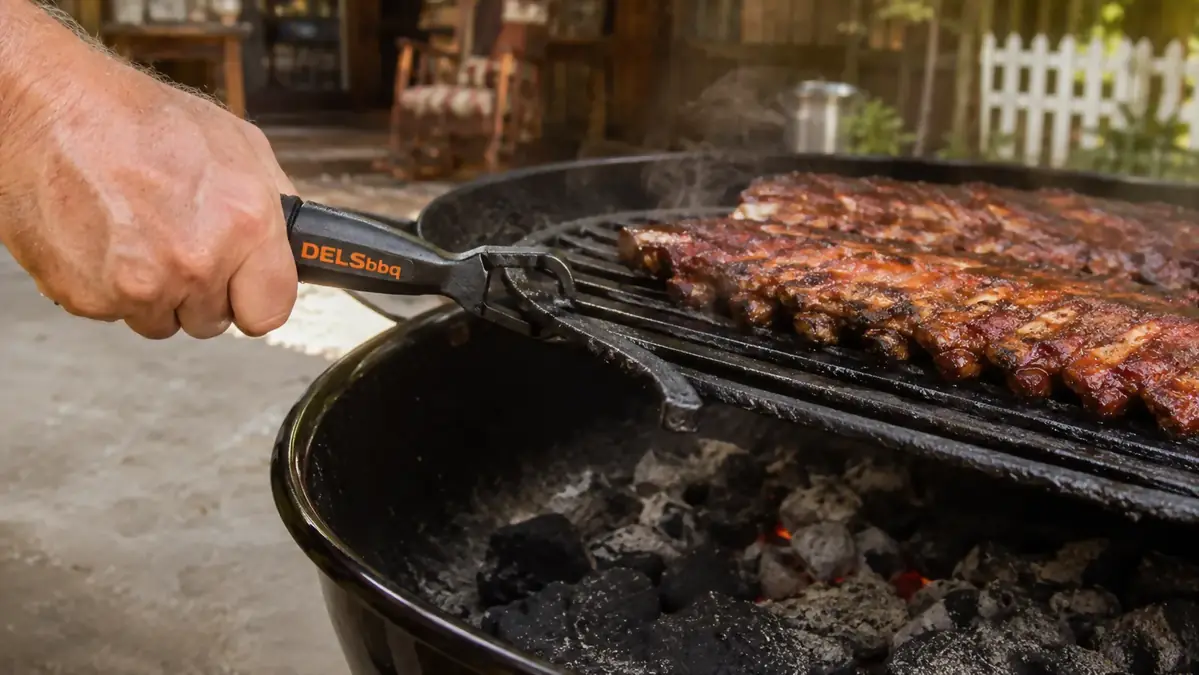
The DELSbbq lifter earns its spot for one job and does it better than anything else I've tried: pulling a fully loaded, screaming hot cooking grate off the fire without setting it down crooked. The two cast iron hooks slide under the grate bars and lock, and once they're seated, the whole grate lifts level, ribs and all. I've moved a grate carrying a full rack of St. Louis ribs off my kettle more times than I can count, and I've never had it list sideways the way it might in a gloved hand that's also thinking about not touching the firebox. It hangs on a single S-hook next to my chimney starter, which matters more than it sounds like it should. My grill cart is already crowded with a spatula, a thermometer probe, and whatever Owen left out there the last time he grilled, so a tool that takes up almost no space earns extra credit before it even does its job.
It also cleans up in about ten seconds flat. I run it under the hose after a greasy pork shoulder cook, wipe it down, and it's ready to hang back up smelling like nothing at all. That matters more once you've owned a pair of grill gloves for a full season and know what they start to smell like by August. The other thing the DELSbbq grate lifter does well is rated weight. It's cast iron, and it's built to carry a loaded grate without bending or flexing, which is not something I can say with the same confidence about my own grip strength on a bad, sweaty, hundred-degree cookout day.
There's also a small learning curve, or really the lack of one once you've used it a handful of times. The first two or three cooks, I was still getting used to seating the hooks under the right pair of bars before I lifted, and I set a grate down slightly crooked once, early on. By the fourth or fifth use it was second nature, the same way you stop thinking about a spatula angle after enough burgers. Renata noticed before I said anything about it. She pointed out I'd stopped grabbing a dish towel to fold over my hand every time I needed to check on a brisket mid-cook. That's really what sold me on it, not one dramatic moment, just fewer trips back to the kitchen for a towel.
Where Grill Gloves Win
Where the gloves pull ahead is coverage. The DELSbbq lifter only protects the hooks and the handle, your hand is still sitting several inches from the fire the whole time you're lifting. A good pair of heat-resistant grill gloves goes up past the wrist, and I've reached past a flare-up to grab a foil pan without flinching in a way I'd never try bare-handed with just a lifter. Gloves also do more than one job. The lifter is a one-trick tool, it only grips grate bars. Gloves handle the cast iron skillet, the water pan, the chimney starter, and whatever hot mess Gil hands you over the fence, all with the same pair on your hands. If you're the kind of cook who's touching a dozen hot things in the span of ten minutes, that versatility is worth something the lifter can't offer.
Grip is the other place gloves win, at least on paper. The textured silicone palms on a decent pair hold on even when your hands are sweaty, which happens fast once you've been standing over a kettle in July. The DELSbbq lifter takes a little more attention. The hooks need to be seated at the right angle before you lift, and if your palms are damp and you rush it, you can feel the handle start to slip in your hand. It's never actually happened to me past a scare, but I've had that half-second of doubt more than once, and gloves don't give you that moment. They just grip.
Gloves have their own downsides that don't show up until you've used a pair for a while, though. Mine started to stiffen at the seams after enough washes, and the padding in the palm thinned out faster than I expected for something that never actually touches food, just heat. A worn pair still looks fine from a few feet away, but you can feel less protection through the palm than you had on day one, and there's no obvious warning sign before that thinning becomes a real problem. Gloves also run bulkier than they need to for a lot of the small, precise moves right at the edge of a grate, which is exactly the gap the lifter fills.
Stop Reaching Toward the Fire Bare-Handed
The DELSbbq grate lifter handles the one job that burns the most knuckles: pulling a hot, loaded grate straight off the coals. See today's price on Amazon and decide if it earns a hook on your own grill cart.
Amazon Check Today's Price on Amazon →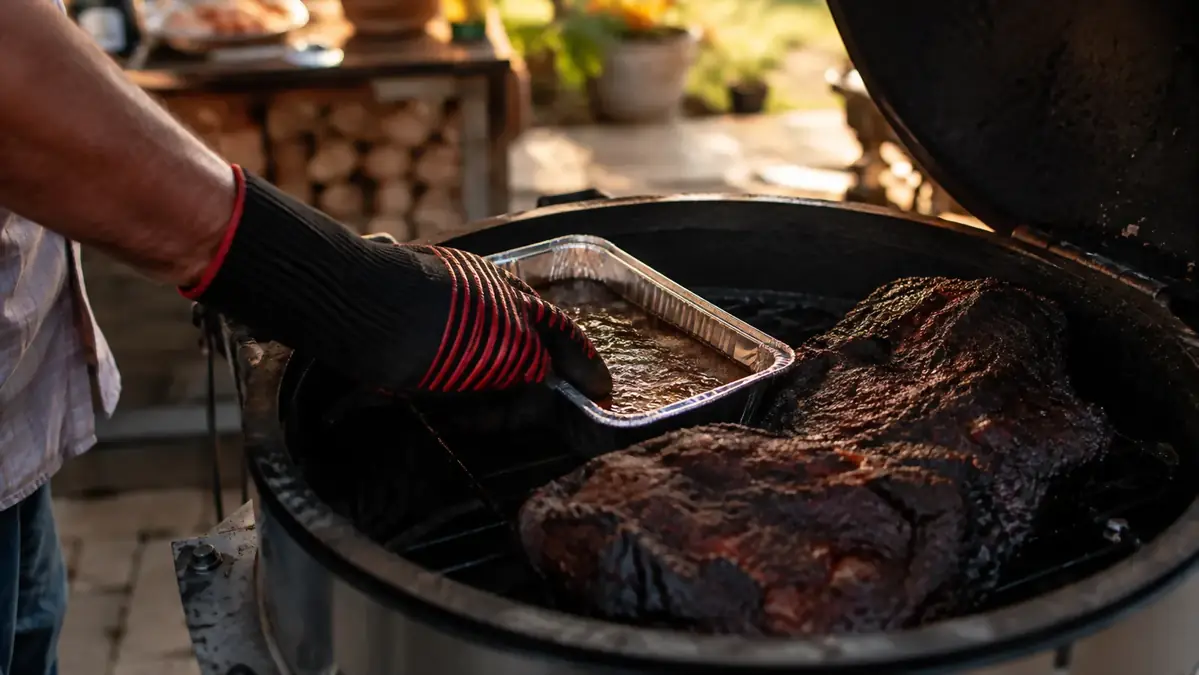
What Changed on My Grill Cart
I didn't retire my gloves when I bought the lifter, and I don't think most people should. What changed is which one I reach for first. Adding charcoal mid-cook, pulling the grate to flip a brisket, moving a grate that's carrying eight burgers and won't hold still, that's the lifter every time now. Grabbing a foil pan of drippings, moving the water pan on the pellet rig, handling anything that isn't the grate itself, that's still gloves. Having both means I'm not making the lifter do a job it was never built for, and I'm not trusting a bare glove grip on a grate loaded with a full cook's worth of food.
I tested this out loud with Gil one Saturday, more or less by accident. He came over to borrow my chimney starter, saw the lifter hanging on the cart, and asked what it even did. I handed it to him mid-cook and let him pull the grate off my kettle himself. He got the hooks seated on the second try and admitted afterward that his gloves had never felt quite that secure lifting a full grate, even though he trusted them for everything else around the fire. He didn't buy one that day. He borrowed mine instead, the same way he borrows everything else off my cart and never quite gets around to giving it back.
The one place I still slip up is forgetting where I set the lifter down between uses. It's small enough to lose in the grass next to the kettle, which never happens with a pair of gloves sitting on the side shelf where you can't miss them. If you want the step-by-step on how I actually use it during a cook, I wrote up how to clean grill grates with a lifter without waiting for the fire to die down, which is the exact situation where owning one starts to make sense.
Who Should Buy Which
If you're cooking on a kettle or a similar open-grate setup and you're the one adding charcoal mid-cook, adjusting vents, or pulling the grate to check on food, get the DELSbbq lifter first. It solves the specific, repeated moment that burns people, which is grabbing a hot grate bar with a towel or a bare hand because the gloves were sitting inside on the counter. It's small, it's cheap enough that it's not a real decision, and it does the one job better than gloves do it. If you already own a decent pair of gloves and mostly cook on a pellet rig where you're not handling the cooking grate itself very often, the lifter is a smaller win for you, still useful, just not as big a difference as it makes for kettle cooking.
If you're someone who's constantly touching hot things beyond the grate, cast iron, foil pans, a chimney starter, coals you're spreading by hand, buy the gloves first and add a lifter later. My honest setup after a full season with both is that they live in the same spot on the cart and I use them for different halves of the same cookout. Neither one made the other pointless. The lifter just finally gave me a better answer than a folded dish towel for the one moment that used to end in a burned knuckle almost every single weekend.
Price isn't really the deciding factor here either way, both tools cost little enough that owning one doesn't rule out the other. The real question is which moment you're trying to solve first. If burned knuckles from the grate itself are your problem, start with the lifter. If it's everything else around the fire that worries you, start with the gloves. Most people who cook regularly end up needing both eventually, it's just a matter of which one earns the first spot in the drawer.
The Grate Lifter That Replaced My Dish Towel Trick
After a full season testing it against gloves for every job on the grill, the DELSbbq lifter earned its permanent spot for pulling the cooking grate. Check today's price and see if it's worth adding to your own cart.
Amazon Check Today's Price on Amazon →