
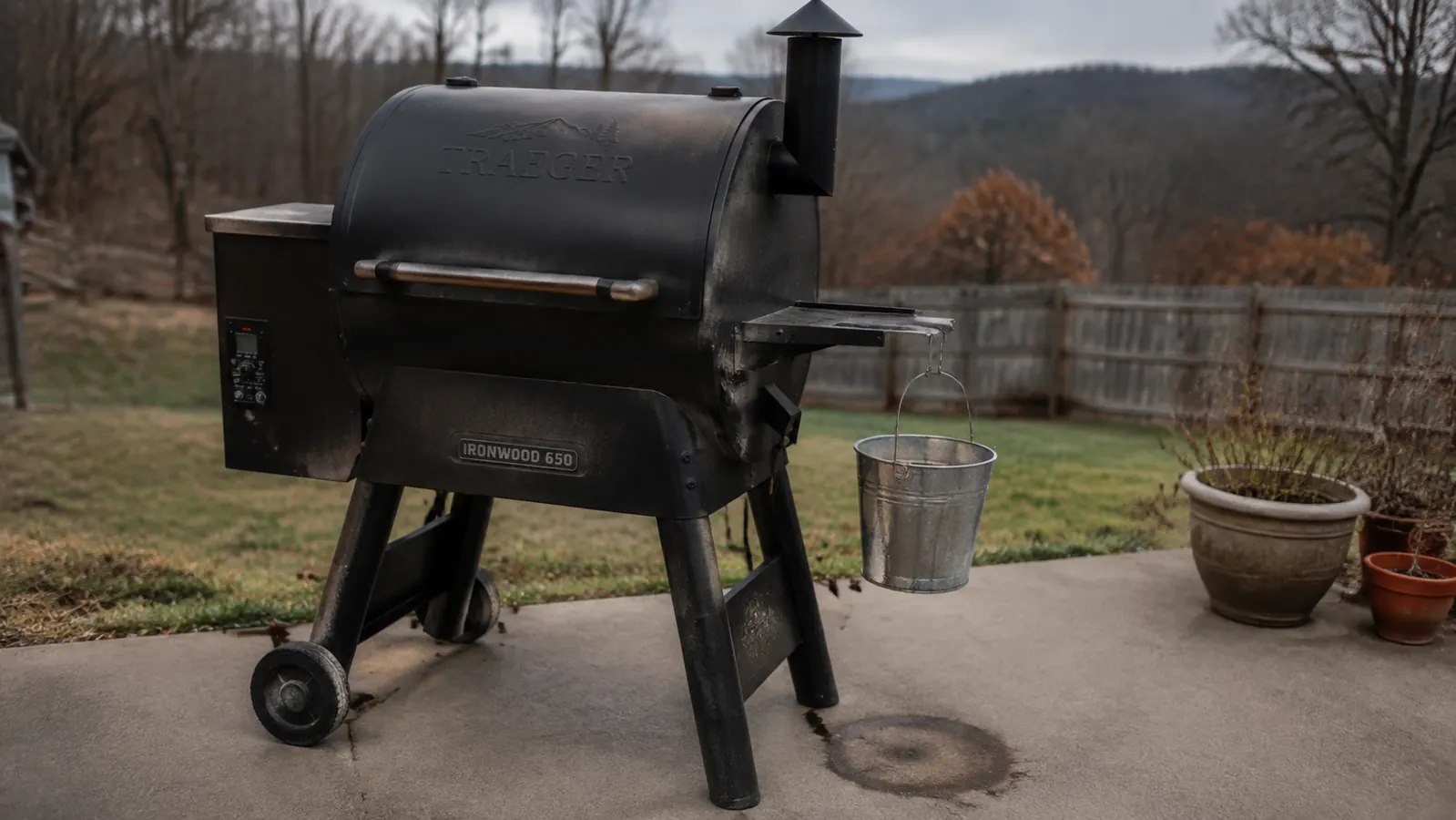
I didn't buy the Traeger grease bucket because of a mess I made. I bought it because of a mess Gil almost made. His drip pan had rusted clean through at the seam, and when he finally noticed, there was a puddle of old grease sitting an inch from his propane line. Nothing happened, but it scared him enough that he told me about it over the fence, and I went and ordered the Traeger HDW152 that same night for my own pellet rig.
So I went in already sold on the idea. What I want to cover here is everything that didn't show up in the marketing copy or in my own first impressions, the stuff you only find out after you've run it through enough real cooks. If you read my other piece on a full year with this thing, this one skips the highlight reel and goes straight at the parts that annoyed me.
The Quick Verdict
Good bucket, imperfect liner fit, and a smell problem nobody tells you about upfront. Still worth having, but go in knowing the whole picture.
Amazon Check Today's Price →Before you buy one, know exactly what you're getting into.
The Traeger HDW152 solves the grease problem, but it comes with a couple of habits you'll need to build. Check today's price on Amazon and read the full breakdown below first.
Amazon Check Today's Price on Amazon →How I Actually Use It
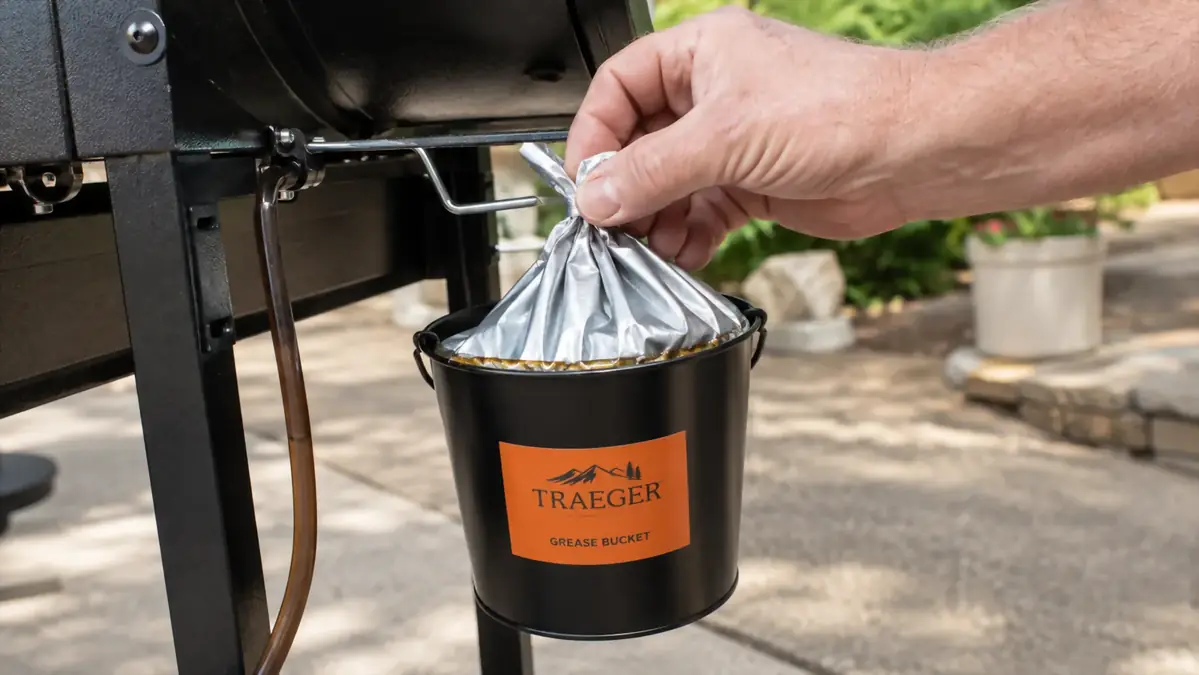
My setup is a mid-size pellet grill on the back patio, and the bucket hangs off a bracket under the drain tube. It's a small metal pail, roughly coffee-can sized, and you drop a foil liner in before you cook. That part is straightforward and I have no complaints about the bracket or the hook. What I want to walk through is the day-to-day reality of living with it, not the install.
I don't run a fresh liner every cook. I use one for two or three shorter sessions, chicken quarters or a couple racks of ribs, and save new liners for anything heavy on fat. That's the same rhythm most people land on. But stretching a liner across multiple cooks is exactly where the problems I'm about to cover actually happen. Run one liner per cook and you'll dodge most of this. Most people don't, myself included, because the liners cost real money over a season.
I keep the bucket on the grill year-round now, through winter storage in the garage and everything. That's a habit worth mentioning because a couple of the issues below only show up because the bucket sits there between cooks instead of getting emptied and rinsed every single time.
Before I light the grill now, checking that bucket is just part of the routine, the same as topping off the pellet hopper before I start. It's a fifteen-second glance, is there a liner in there, is it recent, is there any pooling around the rim where it meets the bracket. It sounds like overkill for something this small, but after one bad surprise you stop skipping that step.
The Smell Nobody Warns You About
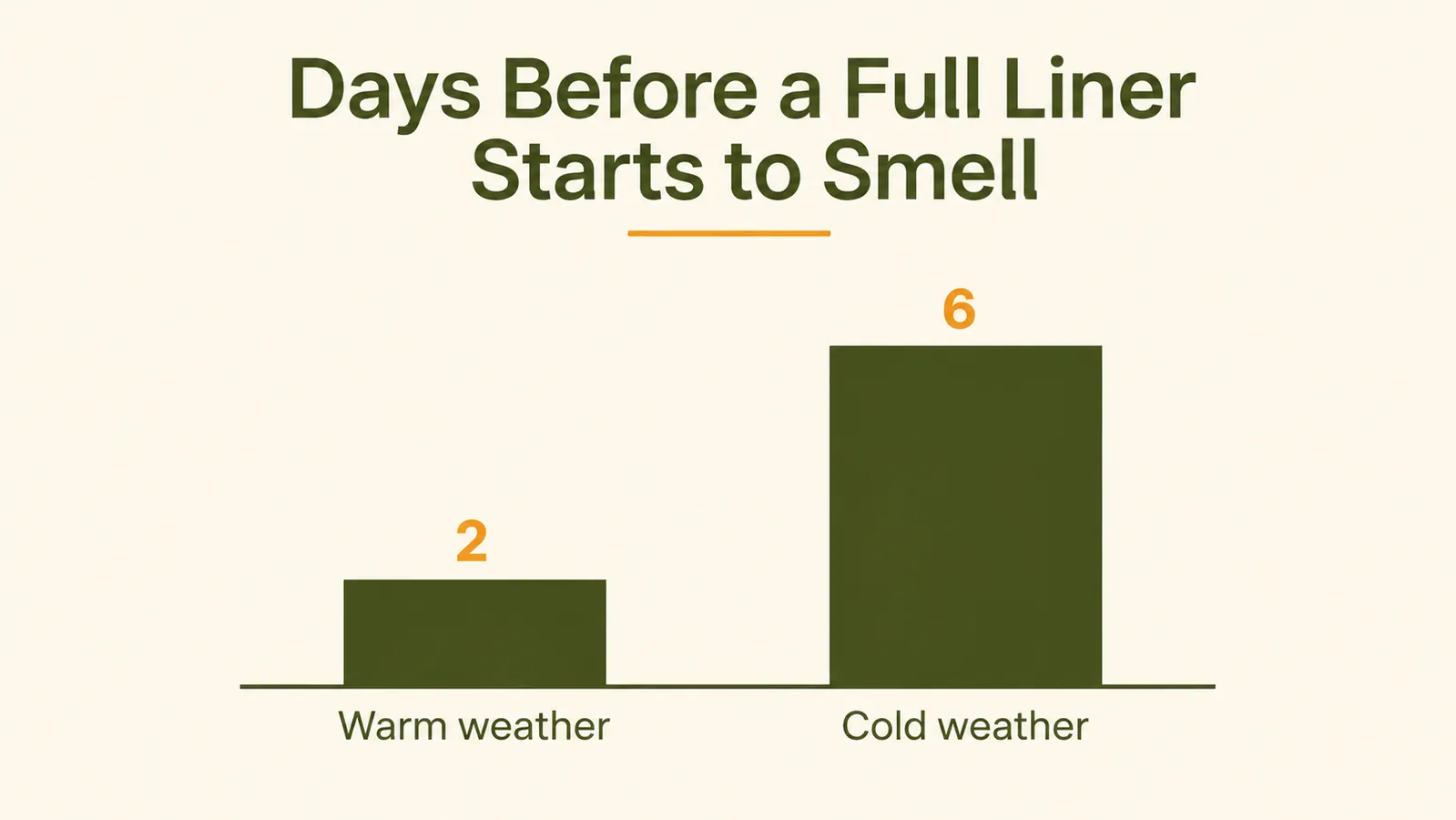
This is the one that surprised me most, and it's the reason I'm writing this second review instead of just letting the first one stand. Rendered fat sitting in a sealed foil bag, especially in warm weather, starts to smell within a couple of days. Not campfire smoke, not barbecue, a sour fat smell that gets worse the longer it sits. I found this out because Danielle pulled into the driveway one evening for a cookout and made a face before she even got out of the car.
It turned out the liner from a Sunday cook was still sitting in the bucket on Wednesday. I'd meant to swap it and forgot, and three warm days had done their work. Once I pulled it and tied it off, the smell was gone within an hour, but it was a genuinely unpleasant surprise the first time it happened, and nothing about the Traeger packaging or the instructions mentioned it. You learn it by living with the thing.
There's a bug angle to this too that caught me off guard the first warm season. Old grease left sitting draws wasps, and I found a couple circling the bucket on a hot afternoon before I ever noticed the smell myself. Now if I see anything hovering near that side of the grill, I have a pretty good idea what I'm going to find before I even walk over.
Cold weather is a different story entirely. Once the temperature drops, the same liner can sit for close to a week with almost no smell at all, because the fat sets up solid and stops breaking down the way it does when it's warm. So the honest answer depends heavily on the season. If you're cooking through a Missouri summer, empty the bucket after every cook or two, no exceptions. In the winter you've got more slack than you'd think.
Where the Liner Actually Doesn't Fit
The liner bags are sized close to the bucket, but not perfectly, and the gap matters more than I expected. When you fold the top of the bag over the rim, there's a lip on one side of the bracket hardware where the bag doesn't sit flush. On a normal cook, that's a non-issue. On a heavy cook, brisket trimmed hard before it goes on, or a fatty pork butt, grease finds that gap and runs down the outside of the bag before it pools at the bottom.
The first time I caught it, I'd walked away for maybe forty minutes during a long cook and came back to a thin trail of grease running down the outside of the bucket and onto the ground underneath. Not a flood, but enough to leave a stain I still haven't fully scrubbed off that section of concrete. Since then I fold the liner a specific way, tucking the excess toward the hinge side of the bracket rather than letting it drape evenly, and that's mostly solved it. Nobody tells you to do that. I figured it out from the stain.
That gap is on the same side every time, the side closest to where the bracket pivots for emptying. I've thought about closing it for good with a strip of heat-rated foil tape along that edge, and I might still get around to it, but the fold trick handles it well enough for now that I haven't bothered fixing what isn't currently broken.
I've also had a liner shift out of position entirely on a windy day, the top of the bag folding back on itself when a gust caught it while I had the grill lid open. That one dumped a small amount of grease directly into the bottom of the bucket instead of the bag. Easy enough to clean, the bucket itself wipes out fine, but it's a reminder that the liner is doing all the real work here, and it's not a foolproof seal.

What It Actually Costs You Over a Season
I want to be specific here because the box doesn't do the math for you. I ran through roughly a box and a half of Traeger liners over one summer of regular weekend cooking, and that's stretching each liner across two or three cooks the way I described. If you ran a fresh liner every single time, you'd burn through liners nearly twice as fast. Either way, this is a recurring cost that doesn't show up when you're comparing the bucket's sticker price to a plain drip tray.
I tried a box of generic foil oven bags for about a month to cut that cost down, and they're noticeably thinner than the real Traeger liners. One split on me mid-cook, which is the only time I've had grease reach the actual bottom of the bucket rather than staying inside a liner. I went back to the branded ones after that. If you want the full financial comparison against just running a disposable pan under the drain tube, I laid that out row by row in the grease bucket versus foil catch pan breakdown, including which one actually costs less over a full season.
Whether that recurring cost bothers you probably comes down to how you already think about grill consumables. I don't blink at restocking pellets or picking up a fresh bag of charcoal for the kettle, so the liners just became one more line on that same list. If you're the type who resents paying for anything past the one-time purchase, that's worth being honest with yourself about before you order one.
The Cooks Where It Struggled
Most weekends this thing is a non-event, which is honestly the whole point. But there were two cooks where it showed real limits. The first was a Friday night when Danielle's friends took over the driveway and I ran pulled pork for close to eleven hours straight, low and slow. By hour eight the liner was heavier than I'd ever had it, sagging enough to touch the sides of the bucket, and I genuinely wasn't sure it would hold until the cook finished. It did, but I checked it three separate times that night instead of my usual once.
The second was a church potluck where I had three separate cooks going back to back on a Saturday, forty chicken quarters split across batches. The volume of grease across that many hours meant I swapped the liner twice, which is more than I plan for on a normal day. Neither cook was a failure, the system held both times, but they told me the bucket has a ceiling, and if you're feeding a genuinely large crowd for hours on end, you need to plan on checking it more than the instructions suggest.
Looking back, on both of those cooks I let it ride longer than I should have out of habit, checking once when I should have checked twice. That's more on me than on the bucket, but it's the kind of thing that only becomes obvious after you've pushed it past its comfort zone a couple of times and had to think fast.
The bracket hardware itself has been solid through all of this. I want to give Traeger credit where it's due, because the metal bucket and the mounting bracket haven't given me a single real problem. Everything I've described above is about the liners and the habits around them, not the bucket failing as a piece of hardware. That distinction matters if you're trying to decide whether this is worth buying.
What I Liked
- Bucket and bracket hardware have never actually failed on me
- Cold-weather cooks give you a lot more slack before anything smells
- Once you learn the fold, the liner gap stops leaking
- Keeps hot grease off the ground instead of pooling under the firepot
- Easy to check mid-cook without interrupting anything
Where It Falls Short
- Warm-weather liners smell within a couple days if you forget them
- The liner-to-bucket fit leaves a gap that leaks on heavy cooks if you don't fold it right
- Generic liners are thinner and one tore on me
- Long, heavy cooks push the liner further than I'd like
- Nobody tells you any of this before you buy it
Danielle made a face before she even got out of the car. That's how I found out a forgotten liner smells.
Who This Is For
If you're already running a Traeger pellet grill and you cook often enough that a stock drip tray can't keep up, this is worth having, with the caveat that you have to actually manage it. That means checking the liner during long cooks and not letting a full one sit for days in warm weather. Anyone who already treats consumables like pellets and charcoal as a normal restocking habit will fold liner bags into that same routine without much friction. For a broader case on why the bucket beats scraping a tray, I still stand behind what I wrote in the full year-long review, and the fire-risk angle gets its own treatment in the ten reasons a grease bucket saves you from a nasty cleanup piece.
It's also a solid buy if you host bigger cookouts fairly often, church potlucks, a driveway full of your kid's friends, that kind of crowd. Just build in an extra liner check when the cook runs past six or seven hours, because that's exactly where I've seen it get pushed closest to its limit.
Who Should Skip It
If you cook once a month or less, or you're the type who forgets things sitting on the patio for a week at a time, this isn't going to serve you well. A forgotten liner in July is not a pleasant discovery, and if that's a realistic scenario for your habits, a disposable pan you toss the same day is the safer choice. It's also not the right buy if you're not willing to spend a little on liners regularly, because using this bucket without them just turns it back into a tray that needs scraping, and at that point the Traeger name isn't doing anything for you that a plain metal bucket wouldn't.
Now you know the whole picture, smell included.
The Traeger HDW152 still earns its spot on my grill, but it's a system you manage, not a set-it-and-forget-it fix. Check today's price on Amazon if that tradeoff works for you.
Amazon Check Today's Price on Amazon →